
- In the world of finance, a well-structured trading plan can be considered a cornerstone of success.
- Even if you are a new or experienced trader, a proper trading plan will provide you with a roadmap to navigate complex as well as non-predictable markets.
Understanding the Importance of a Trading Plan.
It is very important to understand the importance of developing a trading plan.
A trading plan will help you with the following things:
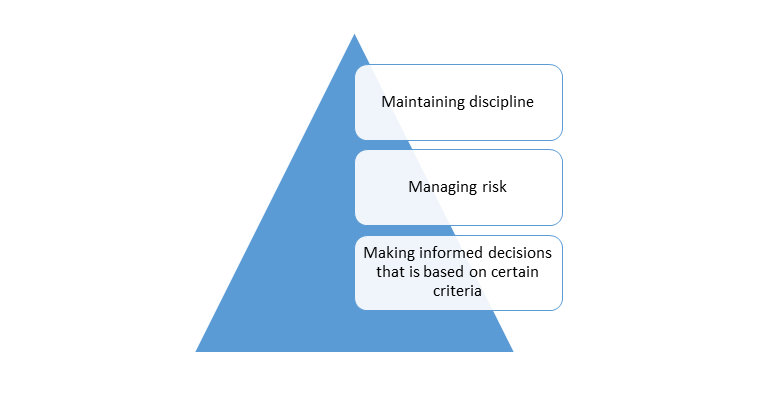
This is a totally personalized strategy that will also align you with your financial goals, trading style, and risk tolerance.
Steps to create a trading plan
A proper trading plan can be created after following a proper procedure.
The following are the main steps that will help you build a correct trading plan:
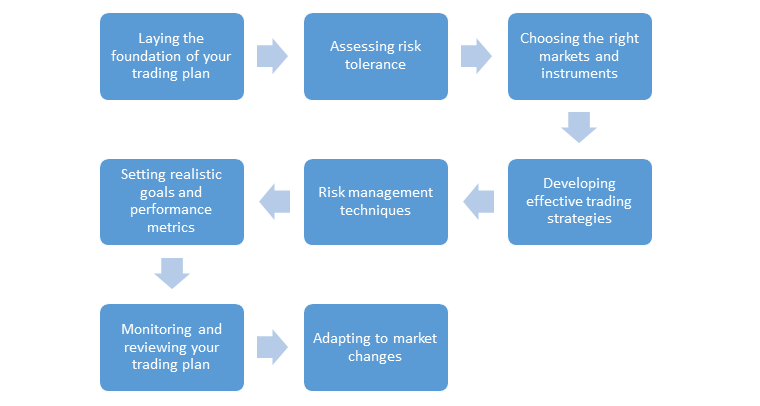
Laying the foundation of your trading plan
- The first step to creating a trading plan is to establish your financial goals and other investment objectives.
- Your goals will have to dictate your trading style, such as whether it is swing trading, day trading, or long-term investing.
Assessing risk tolerance
- The most integral part of your trading plan is to understand and define your risk tolerance.
- This will include determining how much of the capital you will be willing to risk on each trade and also setting a risk-to-reward ratio.
- The most common approach is to never risk more than 1-2% of your trading capital on one single trade.
Choosing the right markets and instruments
Your trading plan should clearly depict which market and instruments you will trade in.
You should choose the markets that you have well understood and have done proper research on, such as the following:

Each market will have its own unique characteristics and other risk factors that will also align with your trading goals and strategies.
Developing effective trading strategies:
- The most crucial component of your trading plan is your trading strategy.
- This will also involve deciding on the criteria regarding when to enter and exit trades.
- Your strategy should also identify potential opportunities and what will trigger you to buy or sell the action.
Risk Management Techniques:
- Risk management is an essential part of your entire trading plan.
- This will include setting stop-loss orders so as to limit potential losses and taking profit orders to secure appropriate gains.
- Additionally, you will also have to diversify your trades, which can help you spread risk across different instruments and markets.
Setting Realistic Goals and Performance Metrics
- It is very important to set realistic goals and benchmarks for evaluating your entire trading performance.
- This will also include specific profit targets, percentage returns, and consistency for executing trades as per your trading plan.
- You should regularly review and adjust these goals, which are totally based on your trading experience.
Monitoring and reviewing your trading plan:
- The most vital part of your trading plan is the process of monitoring and reviewing.
- This will involve keeping a trading journal so as to record all your trades, including the rationale behind them, the outcomes, and all the lessons learned.
- Regularly reviewing your trading activity will also help you identify patterns in your trading behavior, areas for improvement, and the effectiveness of your trading strategy.
Adapting to market changes
- The financial markets are continuously evolving, and so should your trading plan.
- You should be prepared to adapt and update your trading plan in response to changes in market conditions, economic developments, and shifts in your financial situation or goals.
Conclusion
A well-structured trading plan is the key to successful trading.
Frequently Asked Questions (FAQs)
Q1) What is the golden rule of trading?
The golden rule of trading is to cut your losses quickly.
Q2) How does a trading plan look?
A trading plan should outline what, when, and how to buy, and when and how to exit both profitable and unprofitable positions.
Q3) How do I start trading?
Choosing a broker is the first step to starting trading.
Q4) What is the No.1 rule in trading?
Always use a trading plan, which is the No. 1 rule in trading.
Q5) Which platform is best for trading?
Zerodha Kite is the best platform for trading.
About Us
Nifty Trading Academy is our academy, where we teach you about the stock market as well as technical analysis. We also provide a live trade facility and upload blogs for the same.